NATCA Recognizes Scholarship Winners: Chaeli Haupert
Every year, NATCA offers a scholarship program for spouses, children, stepchildren, and legally adopted children of active, retired, and deceased members in good standing for at least two consecutive years. This scholarship is for full-time attendance at accredited colleges and universities within the United States and its territories for an undergraduate degree program.
This year’s prompt asked candidates to examine the factors that can either strengthen or weaken labor unions.
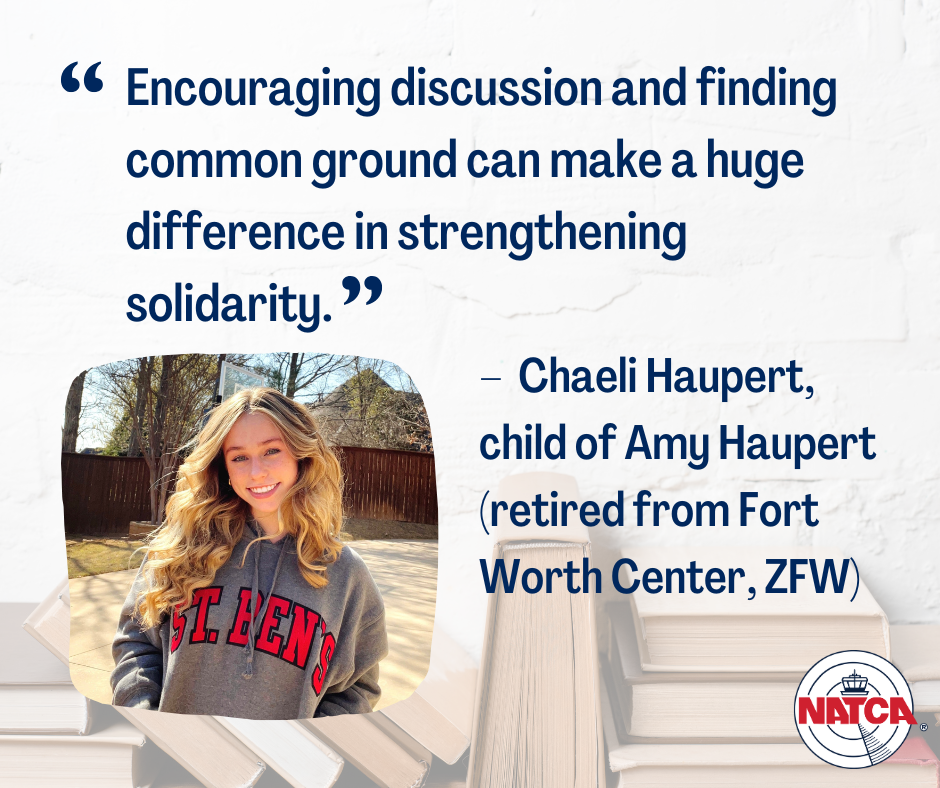
Chaeli Haupert, child of retired members Amy and Scott Haupert (both from Fort Worth Center, ZFW), is among this year’s 20 scholarship winners. Read the essay that Reagan submitted below:
Growing up as a child of two NATCA members, who have a combined 51+ years of membership, I understand the important role NATCA & other unions play in protecting employee’s rights. Unions are essential in fighting for job security, securing fair wages, and ensuring safe working conditions. But, keeping everyone on the same page can be challenging, especially when diverse perspectives, priorities, and interests exist within the union. Some factors that often contribute to division in a union are generational differences, varying levels of experience, and differing personal goals. Additionally, outside pressures such as management, political differences, and economic constraints can further challenge connection within a union.
One issue that can create division within a union is generational gaps. Older union members may prioritize job security and pension benefits, while younger members may focus more on competitive wages and career advancement. Experience level can also affect viewpoints on issues like work conditions or new technologies. Political beliefs can also spark disagreements, especially when certain labor issues align with political ideologies. Despite these challenges, unions can implement several strategies to unify their members toward a common goal. Open and honest communication is one of the best ways to build trust and create a sense of community. Regular meetings, newsletters, and open forums are strategies that can help ensure that everyone, no matter their background, feels heard and valued. Encouraging discussion and finding common ground can make a huge difference in strengthening solidarity.
Strong leadership is essential in keeping union members united. Effective union leaders should be accessible, transparent, and proactive in addressing union member’s concerns. By listening to members and acknowledging their diverse experiences, leaders can cultivate an inclusive environment where all voices are respected and heard. To help promote good communication, union leaders should also encourage collaboration through committees or panels to allow members to contribute ideas, allowing them to feel more involved in the union.
Finally, another way to build unity within a union is through social events that will provide opportunities for members connect beyond work. When members develop strong relationships with one another, they are more likely to stand in together during labor disputes. Having a sense of community among members promotes a shared vision for the union. When union members are reminded of their collective goals, such as fair wages, job security, and improved working conditions, they are more likely to overlook their personal differences. Celebrating past wins and showing how teamwork leads to real progress can help reinforce the importance of standing together.
In conclusion, keeping a union strong and united isn’t always easy, but it’s possible with open communication, strong leadership, and a shared vision. By prioritizing inclusivity and collaboration, union leaders can build a sense of trust among members and reinforce the power that a union holds, ensuring that the union remains strong in advocating for its members’ rights.
